AI Potential Check for mid-sized companies
We review up to three processes in your company. You find out in writing whether AI automation is worthwhile, which data and interfaces are available for it and what has to be clarified before a pilot.
Up to three processes · Written result · Free initial consultation
Three processes that are suitable for getting started
What they have in common: the cases recur, the data is available digitally, and there is one person responsible for the process.
Customer enquiry to draft quote
Enquiries arrive by email or PDF. The system extracts the requirements, retrieves items and terms from the ERP or CRM, flags missing information and creates a draft quote.
We measure minutes per enquiry, time to draft and rework. Prices, dates and dispatch are approved by an authorised person.
Reading incoming documents
Delivery notes, order confirmations and invoices are recognised, read and matched against master and order data. Discrepancies go to a person, the rest to the ERP or DMS.
Metrics are errors per field, processing time and the share without rework. Structured e-invoices are processed directly; text recognition is only needed for unstructured documents.
Searching technical knowledge
Manuals, operating instructions and approved documents become searchable. Answers refer to the source.
We measure search time, resolution rate and the correctness of answers. The search only shows what the person asking is allowed to open.
AI workflow or AI agent: a workflow is usually enough to start

An AI workflow is a fixed process in which AI takes over individual steps. For many processes in mid-sized companies, that is enough. An AI agent only pays off when frequent exceptions call for flexible handling. We explain the difference on the AI agents page.
What the Potential Check examines
For each process, we assess six points and explain the assessment in writing.
Cases
How many cases per month, how many variants, how often an exception occurs. A process with forty special cases a month behaves differently from one with four.
Data
Where the data is stored, how complete it is and whether a machine can read it. An Excel list and a scanned PDF are two different starting points.
Systems
Which systems have a documented interface, which can only be connected indirectly and which not at all.
Responsibility
Who decides, who approves and where human control is mandatory. Without this being clarified, no process goes into operation.
Data protection
Which content must not leave the company, such as HR or engineering data. This determines whether the model runs locally, in the EU or as a mix of both.
Operation
Who looks after the process after the rollout, answers questions and notices when quality declines.
What you receive after the check
- Summary of the discussions with the department and IT
- Up to three processes in order of priority, each with the KPI by which success can be measured
- Data and interface check: what can be connected and what is missing beforehand
- Benefit calculation with your volumes and processing times
- Recommendation on operation (local, EU or mixed) and a clear statement on the pilot
Costs and scope
The initial consultation is free. In it we clarify whether the check suits your project and tell you the price. The check itself is a paid service with a scope set out in writing.
The result belongs to you. You can also take it to another provider.
Worked example: how much time automation frees up
The values are assumptions for illustration. In the check, we calculate with your figures.
Cases per month
Processing time before
Processing time after, including review and rework
Time freed up per month
Other time savings per case
- 2 minutes: 33.3 hours a month
- 4 minutes: 66.7 hours a month
- 6 minutes: 100 hours a month
Time freed up is not yet a saving. Whether it translates into money depends on what your team uses it for. In the real calculation, we deduct running costs for operation and the model.
Run locally, in the EU cloud or as a mix
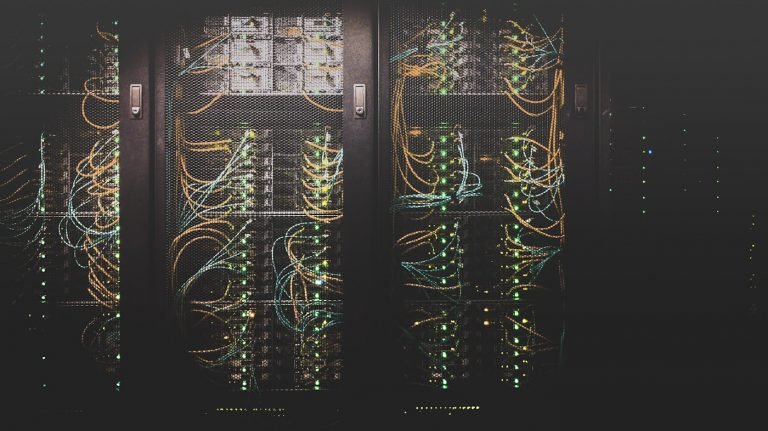
Whether a language model runs on your own hardware, with a provider with a data centre in the EU or as a mix is decided by the check based on your data. For personnel and engineering data, running in your own network is often the only option that passes a data protection review.
What happens after the check
You do not commission everything at once. After each step, you decide again.
Potential Check
Up to three processes assessed, benefits calculated, prerequisites named.
Pilot for one process
A clearly defined task, tested on cases from your daily business and measured against the baseline. Often four to six weeks, provided data, interfaces and contact persons are available.
Rollout
Permissions, integration with production systems, error handling, monitoring, documentation, acceptance and training.
Ongoing operation
Monitoring, updates and maintenance within a scope agreed in advance, with defined response times.
Where mid-sized companies stand with AI
of companies with 20 or more employees use AI.
Source: Bitkom Research, survey of 603 companies, July to August 2026
use AI agents, and a further 29% plan to.
Source: Bitkom Research 2026. Base: companies that use, plan or discuss AI.
of companies with 50 to 249 employees used AI in 2025.
Source: Federal Statistical Office of Germany (Destatis), reporting year 2025, companies with ten or more employees
The three figures come from different surveys and cannot be offset against each other. Most companies so far use AI for writing and summarising. For it to process cases in the ERP or the mailbox, data, permissions and interfaces have to fit. That is what the check clarifies.
Frequently asked questions about the AI Potential Check
What do we learn from the AI Potential Check?
You learn which task is worth a first practical test, and why. If your team transfers orders from emails into the ERP, for example, we look at how often that happens, how much time it takes and which details are regularly missing. That gives you a concrete recommendation on what can be automated and what your team should keep checking.
What does the AI Potential Check cost?
The price depends on the scope. Reviewing a single purchasing process takes less effort than comparing several departments. Before you commission anything, you receive a quote that states which processes we examine, what you receive as a result and what the check costs.
How quickly do we get a result?
A first assessment is often possible during the conversation if you show us a typical case. For the final recommendation we also review exceptions, such as orders with a missing item number. We agree the date for the evaluation with you in advance.
What do we need to prepare if our data has gaps?
Bring a few typical examples and one difficult case. These can be anonymised documents, emails or Excel files. It helps a lot to have someone from the team who can explain how missing details are filled in today. That shows us which gaps actually matter for the planned use.
Do we have to upload company data to a cloud for the check?
No. For the first assessment you can show us the process on site or work with anonymised examples. If confidential documents should stay in the company in a later implementation as well, we plan for operation in your own network from the start.
What happens if AI is not yet worthwhile for our process?
You learn what the reason is and what makes sense as a next step. If mandatory details are regularly missing from orders, an adjusted order form alone can reduce follow-up questions. If the number of cases is too low, the recommendation can also be to leave the process as it is.
Book an initial consultation about the Potential Check
Describe the process that takes up most of your time in two or three sentences. In the initial consultation, we clarify whether the check is suitable and who from your company should take part.